
Frequently Asked Questions
How to grab the Panama hat?
Always handle your Panama hat by holding it by the brim. Avoid gripping the crown, as this can pinch, crack, or damage the straw over time.
How to identify a quality Panama hat?
Quality Panama hats are identified by:
- Weave Tightness: A finer, tighter weave with more weaves per square inch indicates higher quality and longer labor time.
- Uniformity: The pattern should be consistent, even, and symmetrical.
- Flexibility: Genuine, high-quality toquilla straw is soft, lightweight, and pliable, not stiff or brittle.
How to measure your head size?
To measure your hat size, wrap a soft tape measure around your head, positioning it across your forehead, above your ears, and at the widest point of the back. Keep it snug but comfortable, then read the measurement in centimeters at eye level.
Sizing Guide:
- Small: 55–56 cm
- Medium: 57–58 cm
- Large: 59–60 cm
- Extra Large: 61–62 cm
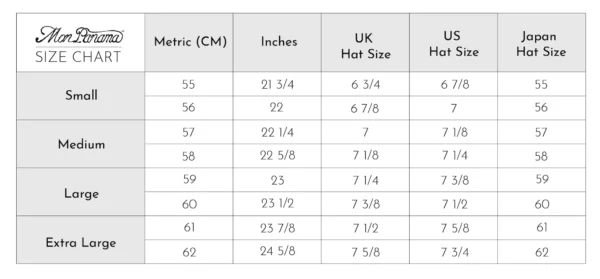
If your measurement falls between two sizes, choose the larger option for better comfort.
How to take care of the Panama hat?
- Avoid Moisture: Keep it dry; toquilla straw is organic and loses shape if wet.
- Handle by the Brim: Always hold the hat by the brim, never the crown, to prevent pinching and cracking.
- Storage: Store in a cool, dry place away from direct sunlight.
- Cleaning: Use a slightly damp cloth to gently wipe away surface dust.
- Shape: If the brim loses shape, light steam can help,use a cotton cloth between the brim and the ironing.
How to travel with the Panama hat?
Packable Styles (Playero, Charlotte, Vizor)
- Fold & Roll: These styles are designed for travel. You can easily roll them for packing.
- Pro Tip: Unroll them immediately upon arrival to maintain their shape.
Structured Styles (Fedora Classic, Fedora Premium, Coco, Jimmy, Marlene etc.)
- Avoid Folding: Never fold or roll these, as the crown will lose its shape.
- Best Protection: Use a hat box or our magnetic hat holder to clip the hat securely to your bag.
- The “Nest” Method: If using a suitcase, place the hat upside down and
“nest” it by packing soft clothing (like socks or scarves) snugly around the brim to support it. Avoid packing with stiff items like denim.
General Care
- Wear It: For short trips, wearing your hat is the safest option.
- Handle Carefully: Always hold the hat by its brim, not the crown.
- Keep your hat Dry : Panama hats are made of organic material (toquilla
palm) and will lose their shape if they get wet
Is the Panama hat waterproof?
No, Panama hats are not waterproof. Because they are handwoven from natural toquilla palm straw, they are porous and will absorb water. Getting them wet can cause the fibers to swell, deform, and lose their shape or structural integrity. Always keep your hat dry and away from rain, pools and oceans.
What is the Panama hat made of?
Panama hats are crafted from the fibers of the toquilla palm (Carludovica palmata), a plant native to the Ecuadorian coast (Manabi province).
Key material features:
- Natural Fiber: Leaves are stripped, boiled, and dried to produce durable, lightweight, and breathable straw.
- Flexibility: The material is naturally pliable, allowing for comfort and packability.
- Artisanship: These fibers are hand-woven by skilled artisans, giving the hat its legendary strength, longevity, and unique finish.
What to do if the hat is a bit too big?
If your Panama hat feels slightly large, the best solution is to use hat filler. Simply tuck the filler inside the inner sweatband to adjust the fit. This allows you to customize the hat to your exact head size. Because fit is a personal preference, whether you like your hat to feel snug or slightly looser, this simple method ensures you achieve the perfect, comfortable fit.
Where do Panama hats come from?
Despite their name, Panama hats originate exclusively from Ecuador.
- Craftsmanship: They are handwoven by skilled artisans using fibers from the toquilla palm.
- Naming Origin: The “Panama” label stems from 19th-century trade routes; Panama served as the hub where Ecuadorian merchants shipped the hats for global export.
- Publicity: The name was solidified in 1906 when U.S. President Theodore Roosevelt was photographed wearing one at the Panama Canal construction site.
Where to find MonPanama in Thailand?
Monpanama hats, bags and clothes are distributed exclusively at premium five-star hotels in Thailand. To name a few:
- Mandarin Oriental
- Four Seasons Bangkok
- Amanpuri
- Rosewood Phuket
- Four Seasons Samui
- Chiva-Som
- Kamalaya
- The Ritz-Carlton
- Six Senses
- And other select luxury resorts.
Which are MonPanama bestseller hats?
MonPanama’s bestsellers blend timeless elegance with versatile style. Our iconic Fedora Classic (7cm brim) and sophisticated Premium editions remain staples, alongside the crisp Colonial Premium. For women, the Coco (10cm) offers graceful style, while the unique Stella silhouette and compact Jimmy (5cm brim) provide a modern look. Finally, the Vizor remains the ultimate essential for effortless outdoor luxury, perfectly rounding out our most-loved collection.
Who is behind MonPanama?
Founded in 2013, MonPanama began when Annie and Luis brought authentic Ecuadorian hats to Thailand. Annie later united global basketry traditions by partnering with Thai artisans, from water hyacinth weavers in Nakon Pathom and Krajud masters in the south to leather crafters in Bangkok.
MonPanama is a celebration of hand-made artistry, evolving into a lifestyle brand with exquisite collections like the “Wanderlust” linen and “Pondicherie” block-printed cotton from India. Their showroom in Ekamai Bangkok is open by appointment for visitors around the world.
Why are many celebrities and film stars wearing the Panama hat?
Panama hats are timeless style icons, favored by stars for their elegance and “cool” factor.
-
- Classic Icons: Clark Gable in Gone with the Wind, Humphrey Bogart in Casablanca, and Edward G. Robinson in gangster films popularized the look.
- Leading Men: Charlton Heston, Sean Connery, and Johnny Depp have all cemented the hat as a symbol of rugged sophistication.
- Hollywood Glamour: Legendary female stars like Audrey Hepburn and Grace Kelly also embraced the style for its chic, tropical appeal.
Why are Panama hats expensive?
Panama hats are expensive for these reasons:
- Handwoven Artistry: They are crafted by hand by skilled artisans, not mass-produced by machines.
- Time-Intensive: Weaving a high-quality hat takes weeks or months. Finer weaves require exceptional precision and patience.
- Premium Materials: They use high-quality toquilla palm, which must be carefully harvested and processed.
The price directly reflects the specialized labor, immense time, and traditional expertise invested in every hat. The tighter the weave the higher the price.
Why are they called Panama hats and not Ecuadorian hats?
Although they are famously associated with Panama, these hats have always been handwoven in Ecuador using toquilla straw.
The “Panama” name stuck during the 19th century because Panama served as the major international trade hub where Ecuadorian merchants shipped the hats before exporting them globally. Travelers passing through the Isthmus of Panama frequently purchased them there, and the name was cemented in the public imagination after U.S. President Theodore Roosevelt was famously photographed wearing one at the Panama Canal construction site in 1906.
It is a very unfortunate misname for the artisans weaving these legendary hats.
